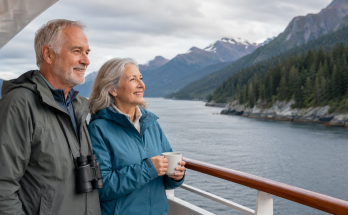
Somewhere in the fifth or sixth decade of a well-traveled life, the appeal of a trip quietly changes. It stops being about how many countries you can stamp into a passport in ten days and starts being about how much of each place you can actually take in. A European river cruise is built, almost from the keel up, around that shift — and it is a large part of why the format has become one of the most popular ways for travelers over 55 to see the continent for the first time.
The format does something ocean cruising and independent travel both struggle to offer at once. You unpack a single time and your hotel floats with you, gliding overnight from one historic town to the next while you sleep. The ships are small — most carry somewhere between 100 and 190 guests rather than several thousand — and they dock in the center of things, often within walking distance of a cathedral square or a riverside promenade rather than at an industrial port miles from anywhere worth seeing.
This guide is for the traveler standing at the very start of that decision: which river, which time of year, which ship, and what a first European river cruise actually involves once you look past the brochure photography. The three rivers most first-timers weigh — the Danube, the Rhine, and the Douro — are genuinely different experiences, and the right one depends far more on how you like to travel than on which postcard caught your eye. There is also one piece of 2026 paperwork that no first-timer should leave home without, and we will get to that before the end.
Why a River Cruise Suits the 55+ First-Timer So Well
The case for river cruising rests on the same quiet principle that makes any trip feel worthwhile later: the ratio of effort to reward. River ships remove most of the friction that wears travelers down — the early-morning airport transfers, the rolling of suitcases over cobblestones, the daily hunt for a restaurant and a route. You wake up already docked in the next town, breakfast is waiting, and the walk into a thousand-year-old market square is often shorter than the walk from a parking garage at home.
The scale of the ship matters more than first-timers expect. With a few hundred passengers at most, the experience is closer to a small inn than a floating resort. You will recognize faces by the second day and learn the crew’s names by the third. There are no lines for dinner, no assigned seating times to negotiate, and no need to reserve a deck chair at dawn. For travelers who find the sheer crowd of an ocean megaship off-putting, the intimacy of a river vessel is frequently the deciding factor.
The accessibility advantages are real and worth naming plainly. River ships have elevators between most passenger decks, gentle gangways rather than steep tenders, and excursions organized around walking pace rather than athletic ambition. Most lines now offer tiered walking tours at each stop — a standard pace, a gentle pace, and sometimes an active option for those who want more — so you can match the day to your energy rather than the other way around. Nothing about the format demands physical exertion you would rather avoid, and that fit is a large part of why the demographic skews toward experienced travelers in their later decades.
Then there is the enrichment, which on a good river cruise is not an afterthought. Onboard lecturers cover the history, architecture, and culture of the regions you pass through, and the guided excursions are led by local experts rather than read from a script. For travelers who want to understand a place rather than simply photograph it, that layer of context is one of the quiet pleasures of the format — and one that the 55+ traveler, with the time and curiosity to appreciate it, tends to value more than most.
The Three Rivers Worth Knowing First — Danube, Rhine, and Douro
Most first European river cruises come down to a choice among three rivers, and while there are others worth exploring eventually, these are the ones that consistently suit a first-timer over 55.
The Danube is the classic introduction, and for good reason. It threads through the heart of Central Europe, linking Budapest, Vienna, and the storybook abbey town of Melk, with the green Wachau Valley unspooling between them. The cities are grand but navigable, the walking tours are gentle, and the ships generally dock close to the historic centers. If your image of Europe runs toward imperial architecture, coffee-house culture, and old towns reached on foot, the Danube delivers it with a minimum of fuss. It is also the most established route, which means the widest range of sailing dates and ship choices.
The Rhine is the river for travelers who want their sightseeing gentle and their scenery constant. The stretch through the Rhine Gorge — castle after castle perched above terraced vineyards — is among the most photographed in Europe, and much of it can be enjoyed simply by sitting on the sun deck as the banks slide past. Port stops such as Strasbourg, Cologne, and Koblenz require relatively little walking, and the cultural payoff per step is high. For a first-timer who prioritizes ease and a steady stream of views over long days on foot, the Rhine is hard to beat.
The Douro, winding through northern Portugal’s terraced wine country, is the quietest and most relaxed of the three. Its cruises tend to run shorter — often five to seven nights — with calm water, an unhurried rhythm, and itineraries built around vineyard visits and the slow, golden landscape of the port-wine valleys. It is the choice for travelers who want their first river cruise to feel less like a tour and more like a long exhale. Those who have already done the grand-cities circuit, or who simply prefer scenery and wine to cathedrals and capitals, often find the Douro the most memorable of the three.
How Long to Sail, When to Go, and What It Really Costs
For most first-timers, a sailing of seven to ten nights hits the right balance — long enough to settle into the rhythm and see a region properly, short enough that it does not become a commitment that crowds out the rest of the year. The Douro’s shorter five-to-seven-night options make it a gentle way to test whether the format suits you before booking something longer.
Season shapes the experience as much as the route. Spring and early summer bring long days, green valleys, and full excursion rosters, while the high summer months deliver the warmest weather and the largest crowds at the most popular stops. Early spring and autumn sailings — and the increasingly popular Christmas-market cruises of late November and December — tend to be more affordable and less crowded, with the trade-off of cooler temperatures and shorter daylight. For a traveler with flexibility in scheduling, the shoulder seasons often offer the best combination of price, comfort, and elbow room.
On cost, the headline fare is rarely the whole story, and first-timers should read the inclusions carefully before comparing prices between lines. Many river cruises bundle in shore excursions, meals, and some beverages, which can make a higher sticker price the better value once you account for what is covered. Just as important is what is not included: international airfare, travel insurance, gratuities, and any visa or entry requirements generally fall outside the fare. Ask specifically about gratuities, drink packages, and port charges when you book, so the number you plan around is the number you actually pay.
The One 2026 Step No First-Timer Should Skip — ETIAS
Here is the planning item that catches travelers off guard, and it is new enough that even seasoned cruisers may not have run into it yet. The European Union is rolling out ETIAS — the European Travel Information and Authorization System — a visa-waiver requirement for visitors from roughly 60 countries who have long entered Europe without any advance paperwork, including citizens of the United States, Canada, the United Kingdom, and Australia. It is not a visa, but a pre-travel authorization tied to your passport, and the requirement is expected to take effect in the latter part of 2026.
For a river cruise that visits several European countries, this matters. The application is done online, carries a modest fee, and is generally approved quickly — but it is not something to leave to the airport on departure day. Apply well in advance of your sailing, make sure the passport you applied with is the one you actually travel with, and confirm that passport has plenty of validity remaining beyond your return date. Because the exact timing of the requirement has shifted more than once, check the official EU guidance close to your travel date rather than relying on what was true a season ago. It is a small step, but it is precisely the kind of detail that can turn an otherwise smooth departure into a stressful one.
Choosing the Ship and the Cabin
Once the river and the season are settled, two ship-level decisions do the most to shape the experience. The first is the line itself, and the question to ask is what kind of company you want to keep. Some river lines cater to a younger, more active crowd; others are squarely oriented toward the unhurried, culturally curious traveler in their later decades. Reading recent reviews with an eye toward the typical passenger profile — not just the star rating — tells you more about whether you will feel at home than any brochure will.
The second decision is the cabin, and on a river ship the calculus differs from the open ocean. Because the rivers are narrow and the scenery is close on both banks, a cabin with a view pays off more often than it does at sea. Many ships offer French balcony staterooms — a floor-to-ceiling window with a railing rather than a full step-out deck — which capture most of the benefit at a lower price than a full balcony. Mid-ship cabins on the middle decks ride most smoothly and put you within easy reach of the lounge and dining room, worth prioritizing if stairs or long corridors are a consideration. And because river ships are small, even the upper-deck cabins are never far from anything; you trade the sprawling amenities of an ocean liner for a vessel you can know completely within a day.
Wrapping it Up
A river cruise asks very little of a first-time traveler and gives back a great deal. You unpack once. The continent comes to you, town by town, while the hardest decision most mornings is which walking pace to choose. The Danube offers the grand cities and imperial history; the Rhine offers castles and easy, constant scenery; the Douro offers wine, calm water, and the slow gold of the Portuguese hills. None of the three is the wrong answer — the right one is simply the experience you most want to wake up inside of.
What separates travelers who come home from a first river cruise already planning the next one from those who feel they merely went through the motions is rarely the river. It is the early decisions — the season chosen for room to breathe rather than peak-month crowds, the cabin with a view over the windowless bargain, and the small matter of the paperwork handled weeks ahead instead of the morning of. Europe by river rewards the traveler who plans the quiet details and then lets the rest unfold at the pace of the current.
Go with one river clearly in mind, a season that suits the way you like to travel, and your ETIAS authorization tucked safely alongside your passport. The towns will take care of the rest.
Safe travels, comfortable beds, and good company to you.
- Megan A.